

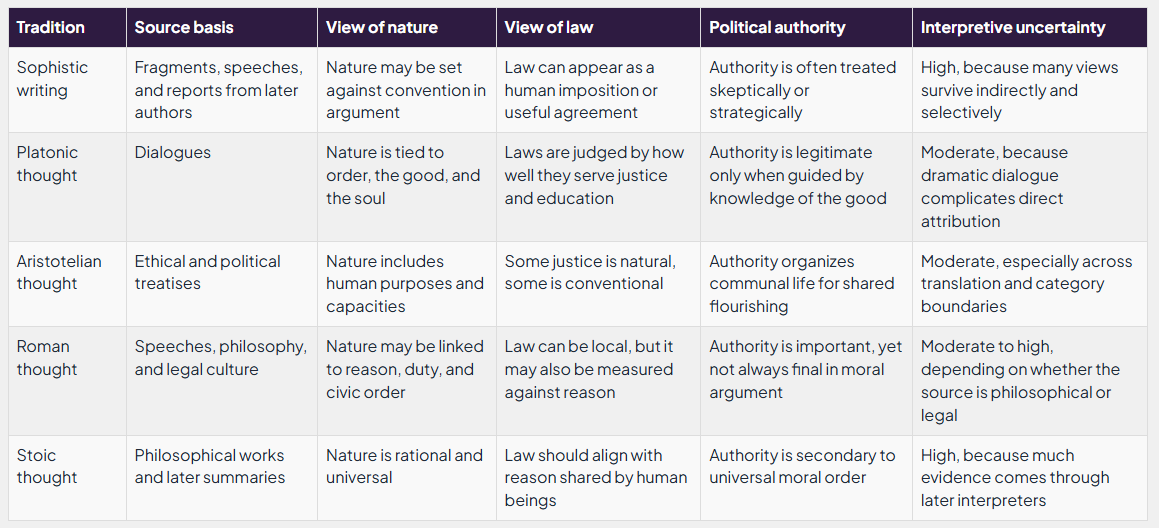
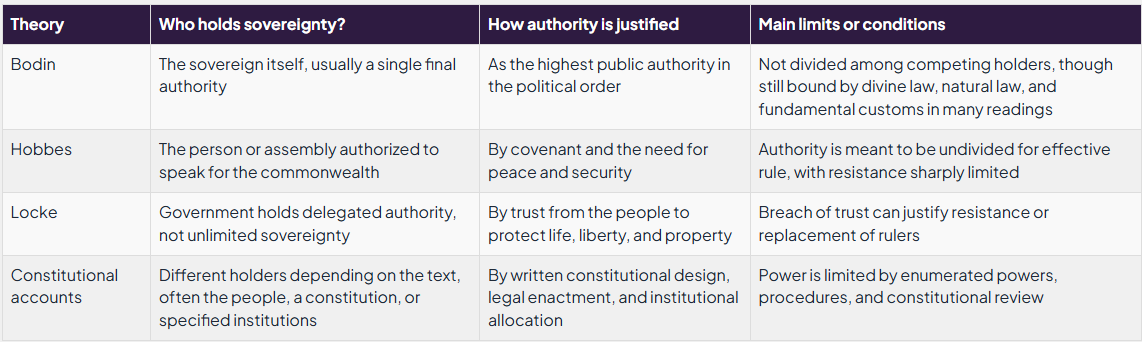
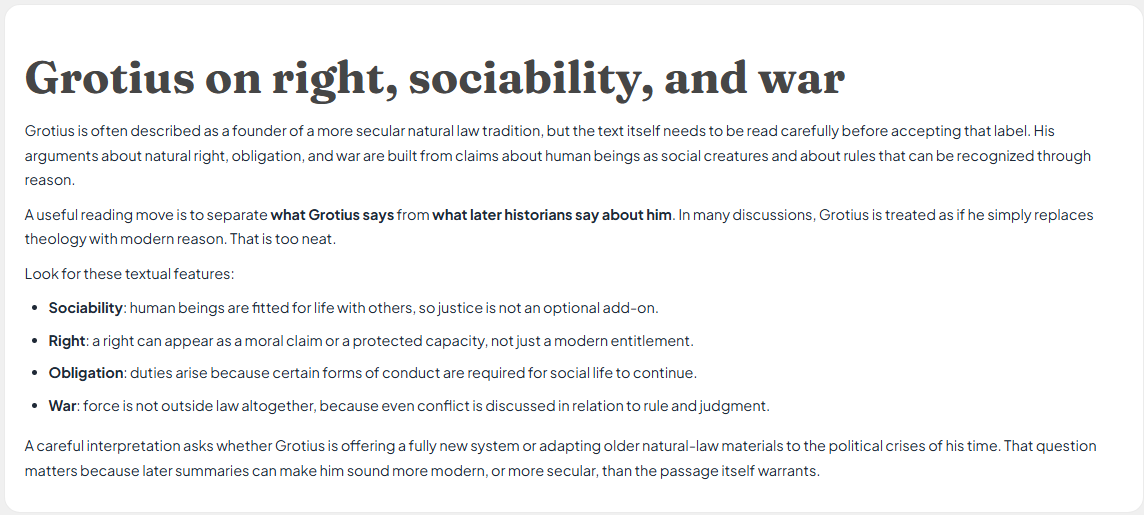
Mil.L. — Mastery in the Instruments of Law and Liberty

An Independent Course of Historical and Legal Inquiry

11 Modules · Self-Paced · Primary-Source Based

A structured study of law, authority, jurisdiction, status, property, sovereignty, courts, and the historical sources from which those ideas developed.

One Course. Two Companion Volumes. A Deeper Inquiry.

Your Mil.L. enrollment brings together a structured course of historical and legal inquiry and two companion volumes by Martin Vale.

Begin with the foundations of rights, authority, jurisdiction, consent, and legal instruments. Then examine the arguments that prevailed in court—and the questions that arise when a challenge fails.

The Course

Mil.L. — Mastery in the Instruments of Law and Liberty

11 Modules · Self-Paced · Primary-Source Based

A guided investigation of the historical foundations, legal instruments, and judicial reasoning behind the language of rights and authority.

Companion Volume

The Grounds That Won

Real Legal Challenges. The Arguments That Prevailed. Why They Worked.

An investigation into successful legal challenges and the reasoning behind the decisions.

Included with Enrollment

Companion Volume

If the Challenge Fails

Appeals, Reconsideration, and the Fight Beyond the First Judgment

An examination of the legal questions and procedures that arise after an unfavorable judgment.

Included with Enrollment

A Look Inside the Course

Centuries of Inquiry. One Course of Study.

From ancient legal philosophy to historical instruments and modern courts, explore the questions, sources, and methods behind Mastery in the Instruments of Law and Liberty.

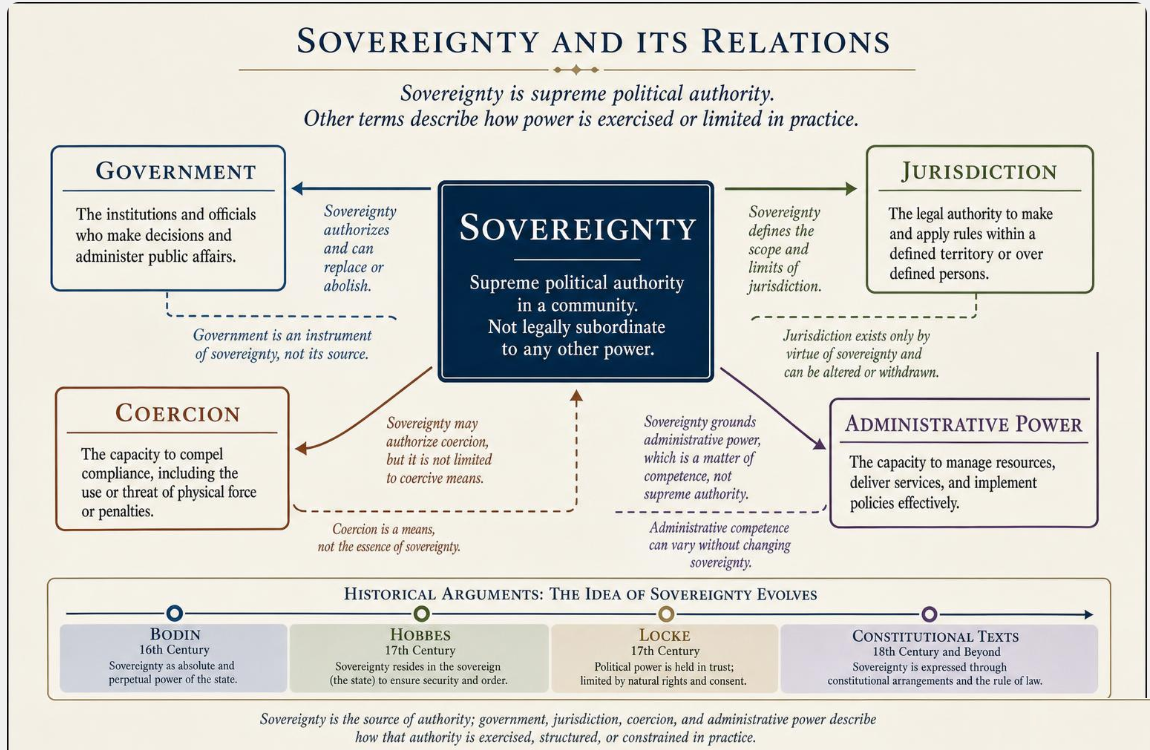
Sovereignty and its relations: government, jurisdiction, coercion, and administrative power

Preview 1 of 15: Sovereignty and its relations: government, jurisdiction, coercion, and administrative power

Mil.L. is an independent educational course offered for personal learning and historical inquiry. It is not an accredited academic program, professional certification, occupational credential, legal qualification, or source of legal advice.

Where do rights begin—and authority end?

We use words like rights, liberty, ownership, citizenship, sovereignty, consent, and jurisdiction constantly.

But beneath those familiar words lies a much older—and considerably more interesting—conversation.

  • What makes an obligation binding?
  • What does it actually mean to own property?
  • Where does jurisdiction begin?
  • Can authority exist without consent?
  • And when someone says “the law says…”—how do you examine the record for yourself?

Mil.L. was built to explore those questions.

Not through slogans. Not through somebody else’s conclusions.

Through history, original instruments, legal concepts, court decisions, competing interpretations, and the language used by the people who developed these ideas.

Learn the Language. Examine the Instruments. Follow the Record.

Mil.L. is a self-paced course for independent learners who want to go beneath the surface of law and political authority.

You’ll move from natural law and the historical foundations of rights through person and status, consent and obligation, jurisdiction, property, citizenship, legal instruments, judicial reasoning, sovereignty, and delegated power.

But the objective isn’t simply to accumulate information.

You’ll learn to ask:

  • What does the source actually say?
  • What did these words mean in their original context?
  • What authority supports the proposition?
  • Is this a holding, an interpretation, or somebody’s conclusion?
  • What does the evidence establish—and what doesn’t it establish?

That’s the method behind Mil.L.

The Course of Study

Eleven modules. Each begins with a question worth investigating.

  1. I.
    Foundations of Law & Natural Right

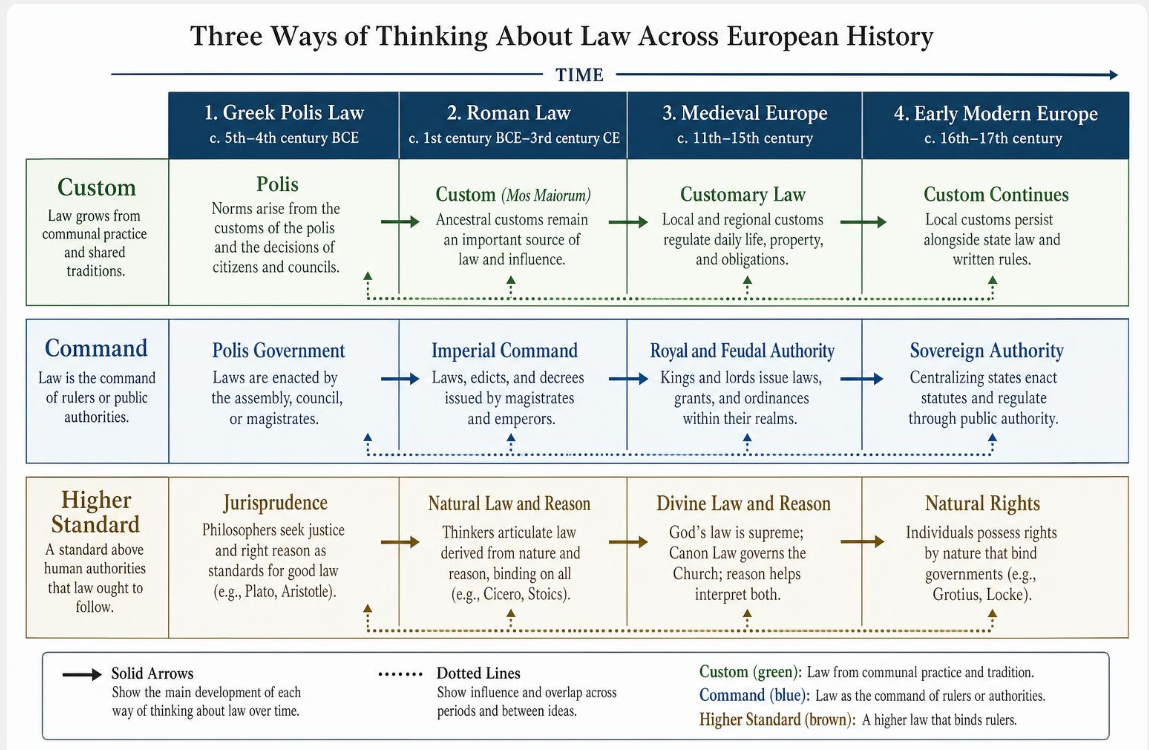
    Do rights come from government, or do they precede it? Trace natural law and natural right from Cicero and Aquinas through Grotius, Locke and Blackstone to the Declaration of Independence, and weigh what each source actually claimed.

  2. II.
    Person, Status & Capacity

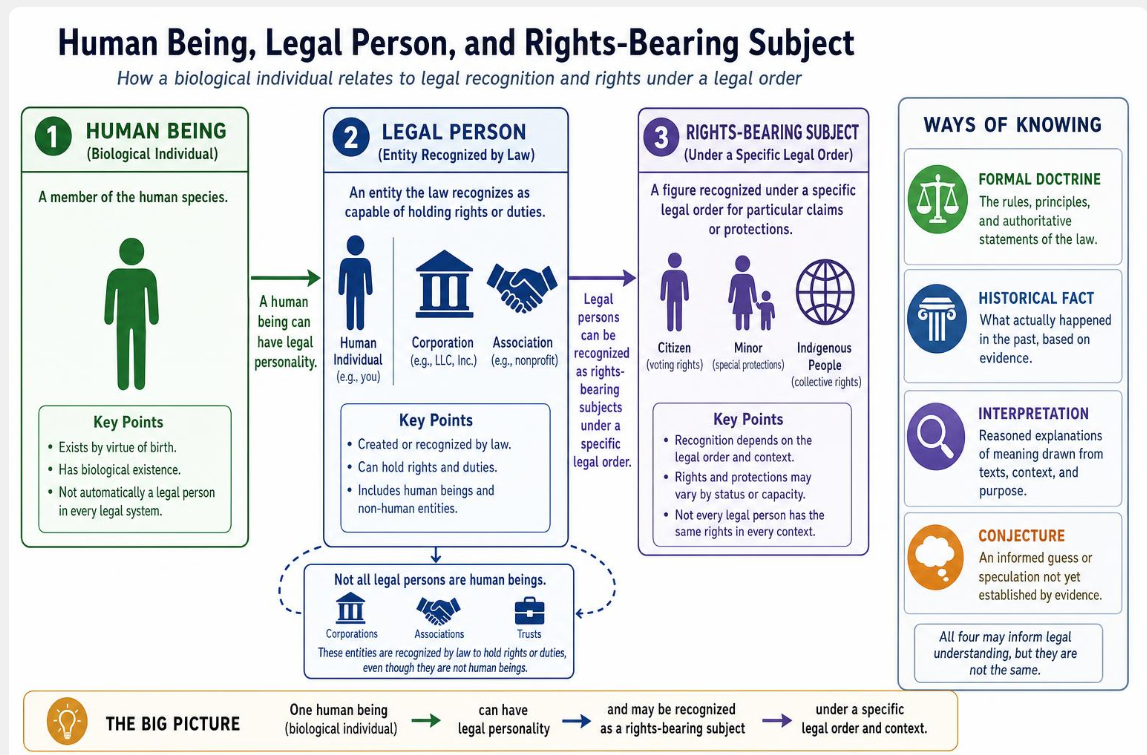
    What is a “person” in law—and when does status change the rights, duties, or capacities the law recognizes? Follow the terminology through statutes, cases, and historical sources rather than assuming ordinary and legal usage mean the same thing.

  3. III.
    Consent, Contract & Obligation

    When does silence amount to consent? Can an obligation exist without a signed contract? Examine assent, consideration, notice, adhesion, implied agreements, and the sources from which legal obligations actually arise.

  4. IV.
    Jurisdiction & Authority

    Where does a court’s or an official’s power begin, and where does it stop? Examine subject-matter and personal jurisdiction, territorial limits, the distinction between law and equity, and the records that establish authority to act.

  5. V.
    Property, Ownership & the Allodial Question

    What does it actually mean to “own” land? Trace title, tenure, taxation, eminent domain, and the historical meaning of allodial ownership to distinguish the interests a property owner holds from the authority government retains.

  6. VI.
    Citizenship, Allegiance & Political Status

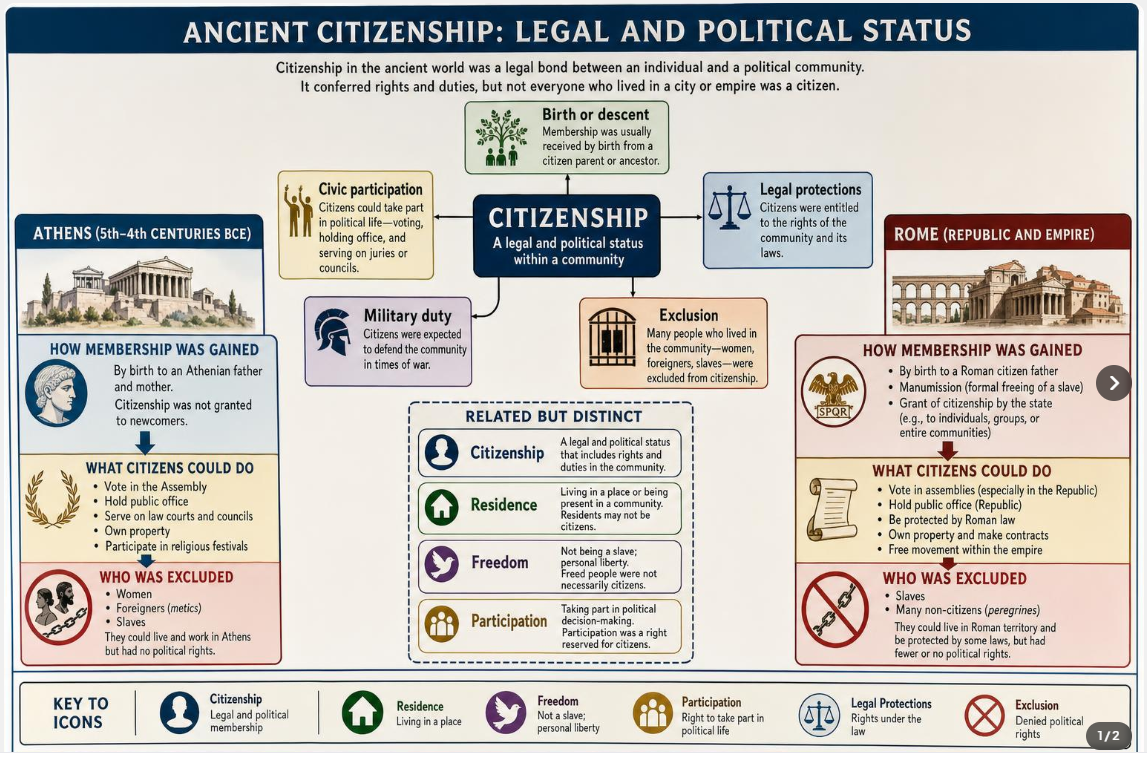
    Is a citizen the same as a subject, a national, or a resident? Follow allegiance and political status from English common law through the Constitution, the Fourteenth Amendment, and the cases that interpreted them.

  7. VII.
    Instruments, Writs & Legal Maxims

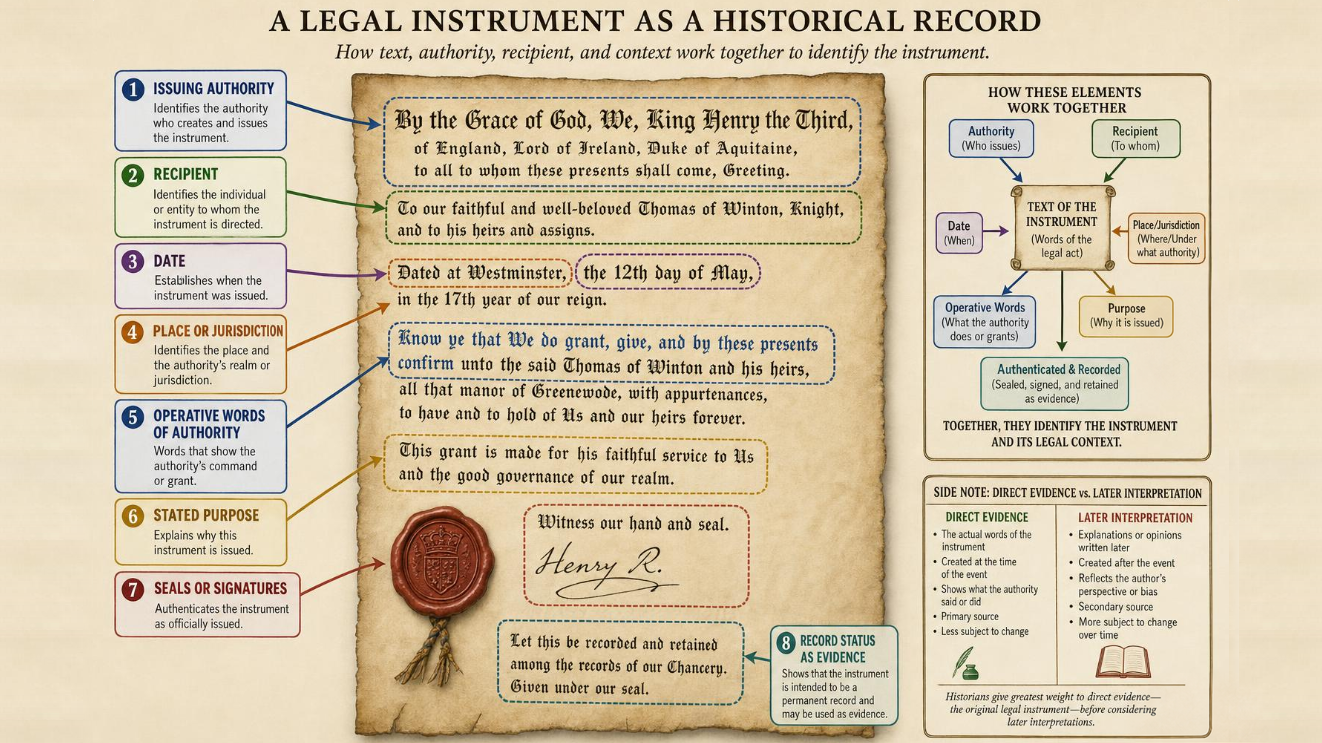
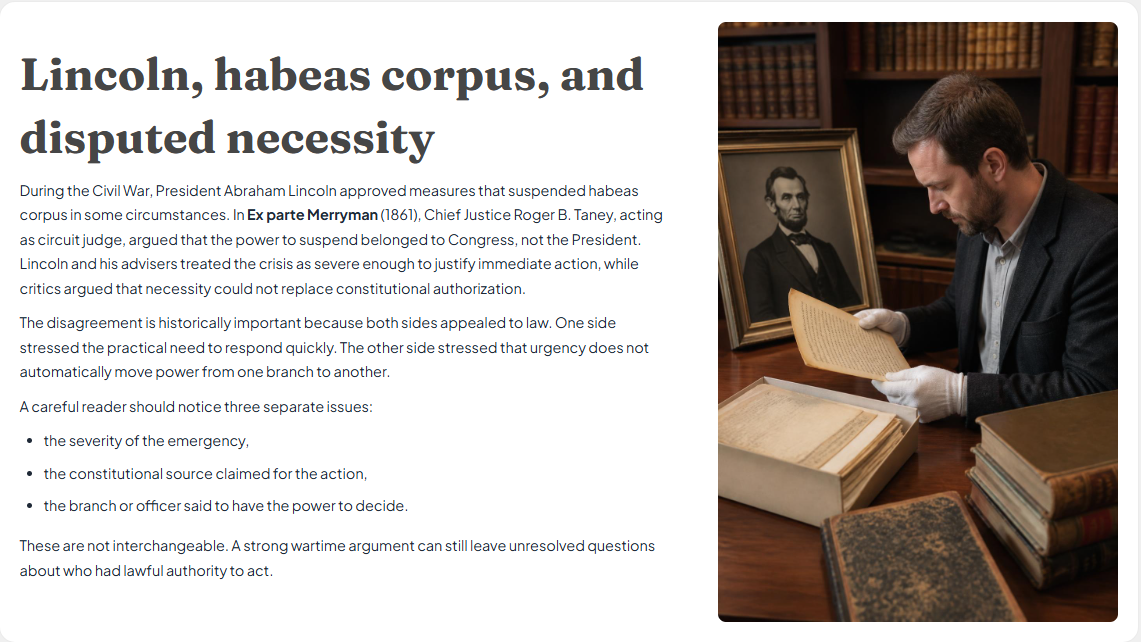
    What gives a deed, an affidavit, or a writ its force? Open the instruments themselves—charters, petitions, habeas corpus, quo warranto, mandamus—and the Latin maxims courts have invoked, to see how each has functioned in practice.

  8. VIII.
    Courts, Cases & Judicial Reasoning

    What did the court actually decide, and what did it merely say? Learn to separate holding from dicta, read procedural posture, weigh precedent and standing, and recognize when a quotation has drifted from its case.

  9. IX.
    Sovereignty, Delegation & Limits on Power

    If authority is delegated by the people, what are its limits—and who enforces them? Examine popular sovereignty, enumerated powers, the Tenth Amendment, ultra vires action, and the persistent question: by what authority?

  10. X.
    Reading the Record: Research, Interpretation & Inquiry

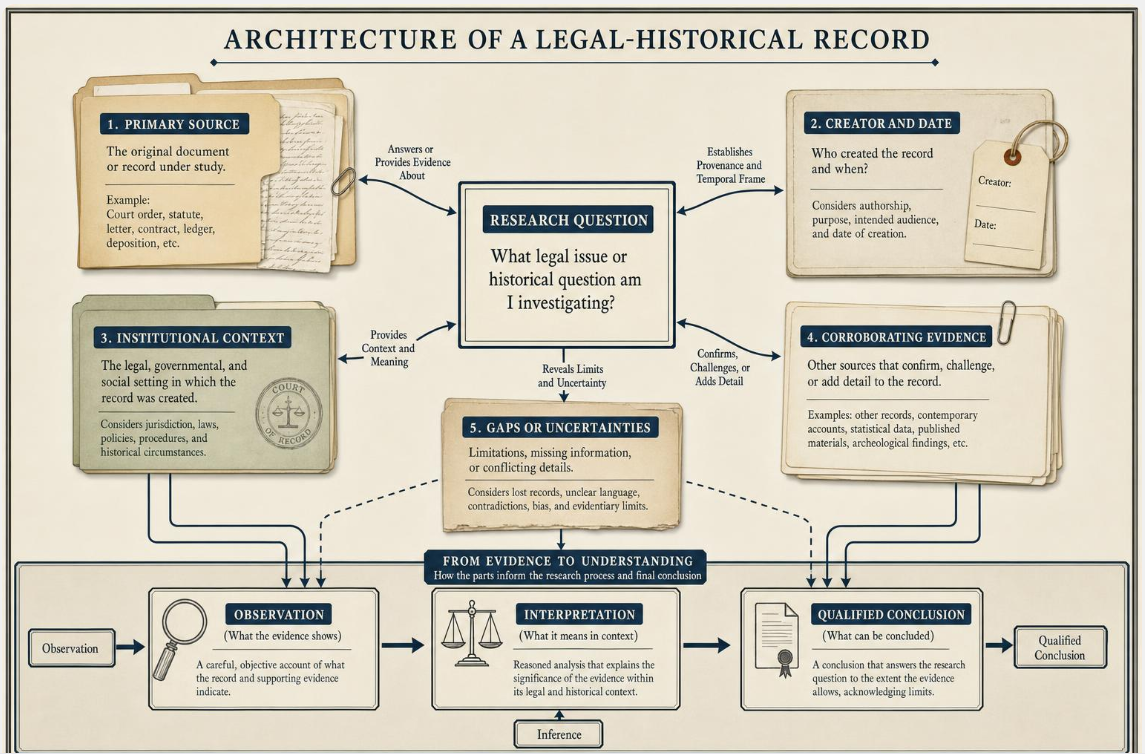
    How do you verify a claim for yourself? Locate statutes, reporters, and archival sources; follow citations to their origin; distinguish binding from persuasive authority; and separate documented fact from interpretation and conjecture.

  11. XI.
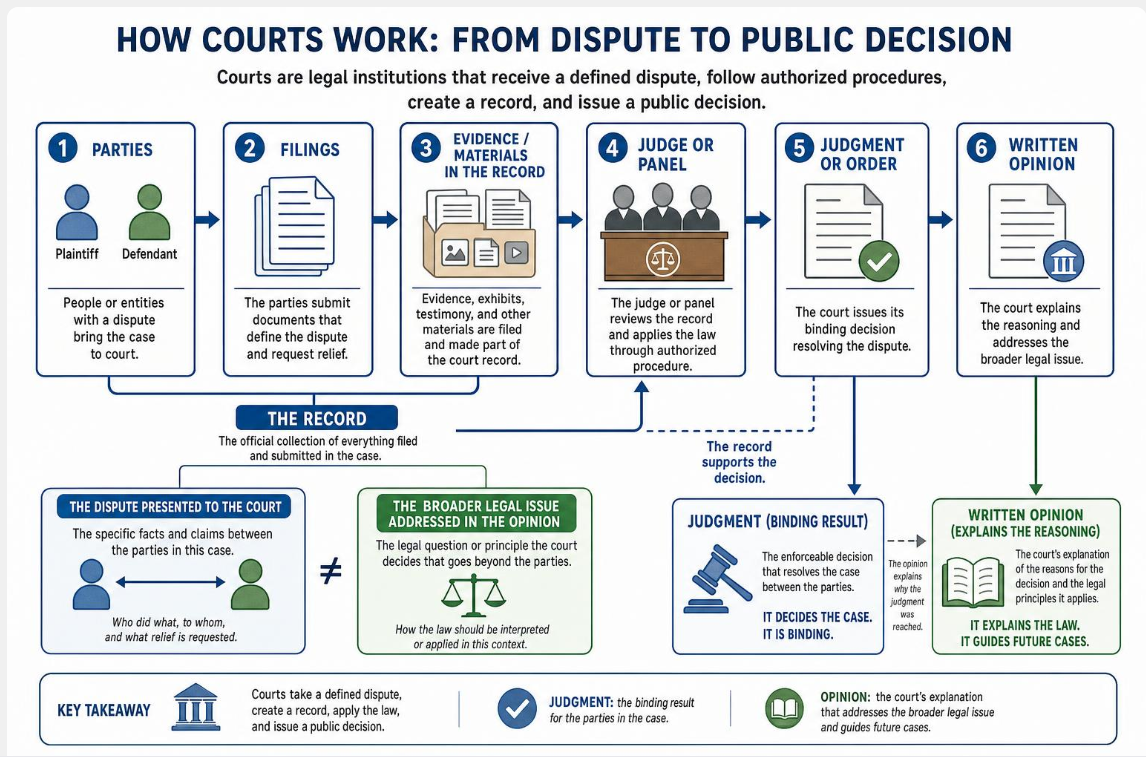
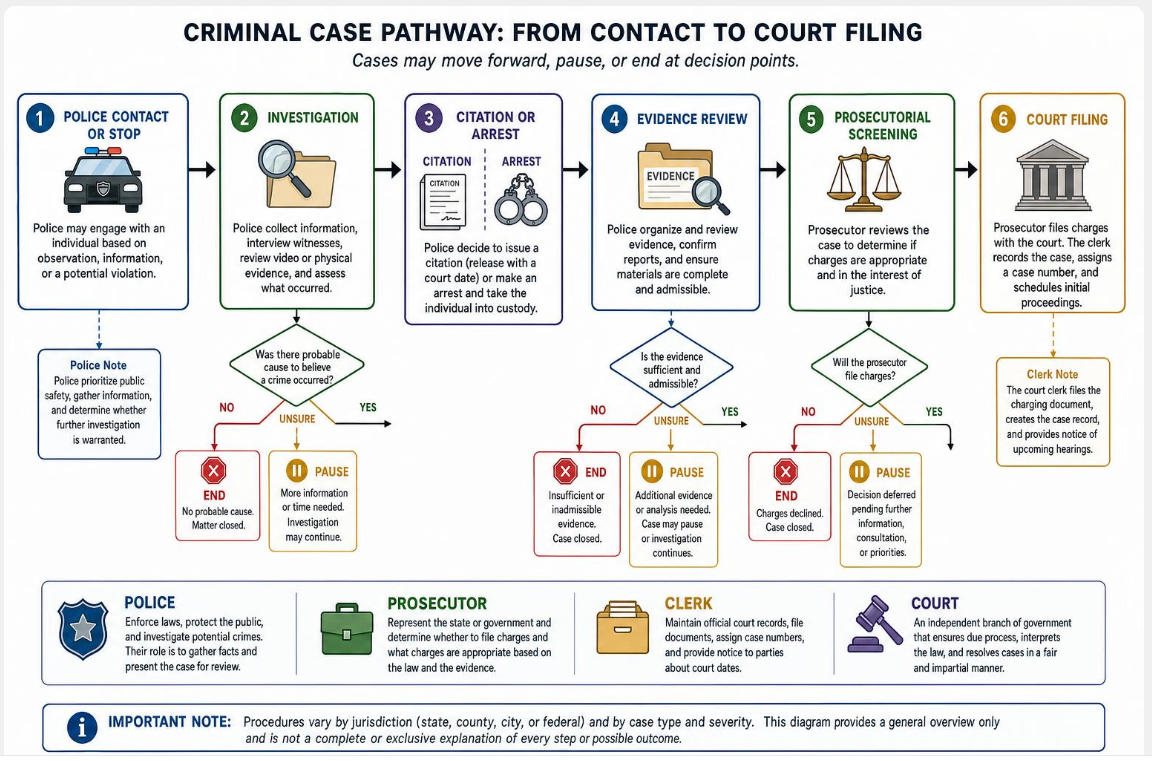
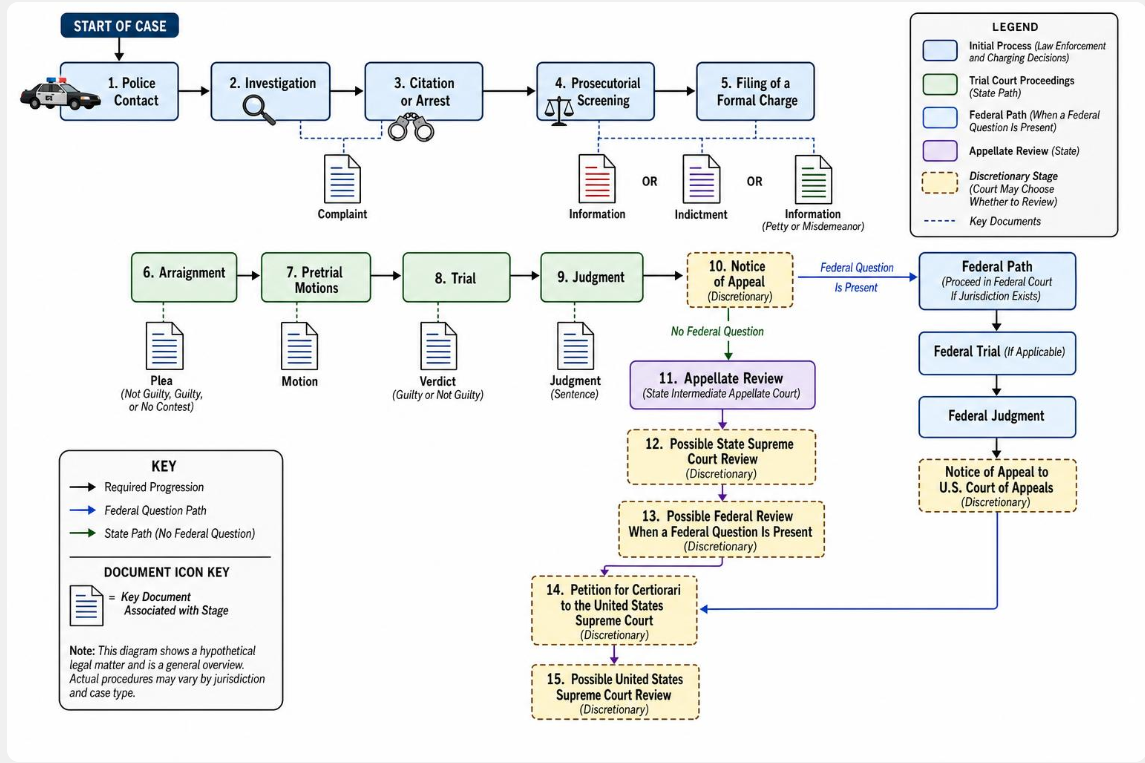
    From Stop to Supreme Court: How the Court System Actually Works

    What actually happens between a traffic stop and the Supreme Court? Follow a case through detention, charging, arraignment, trial, appeal, and certiorari, examining the rules and authorities that govern each stage.

This Isn’t Just Reading

Mil.L. is built around active inquiry.

You’ll work with primary sources, historical comparisons, legal terminology, source-analysis exercises, discovery labs, court-system mapping, supplemental materials, and knowledge checks.

Each module concludes with a 10-question review quiz to test your understanding before you continue.

And in the final module, you’ll follow a case through the actual American court system—from the initial encounter with police through charging, arraignment, trial, appeal, and potential Supreme Court review.

The objective isn’t to tell you what to think. It’s to make you considerably better equipped to determine what the record actually supports.

The Inquiry Doesn’t End With the Course.

Mil.L. begins with the foundations: rights, authority, jurisdiction, consent, property, and the instruments through which legal obligations are created and enforced.

But what happens when those ideas are tested in an actual courtroom?

Every enrollment includes two companion volumes by Martin Vale. One investigates legal challenges that prevailed. The other examines the difficult questions that arise when a court rules against you.

Together, they extend the inquiry from understanding the law to examining how legal arguments are evaluated, decided, and sometimes reconsidered.

The Martin Vale Companion Volumes

First Companion Volume
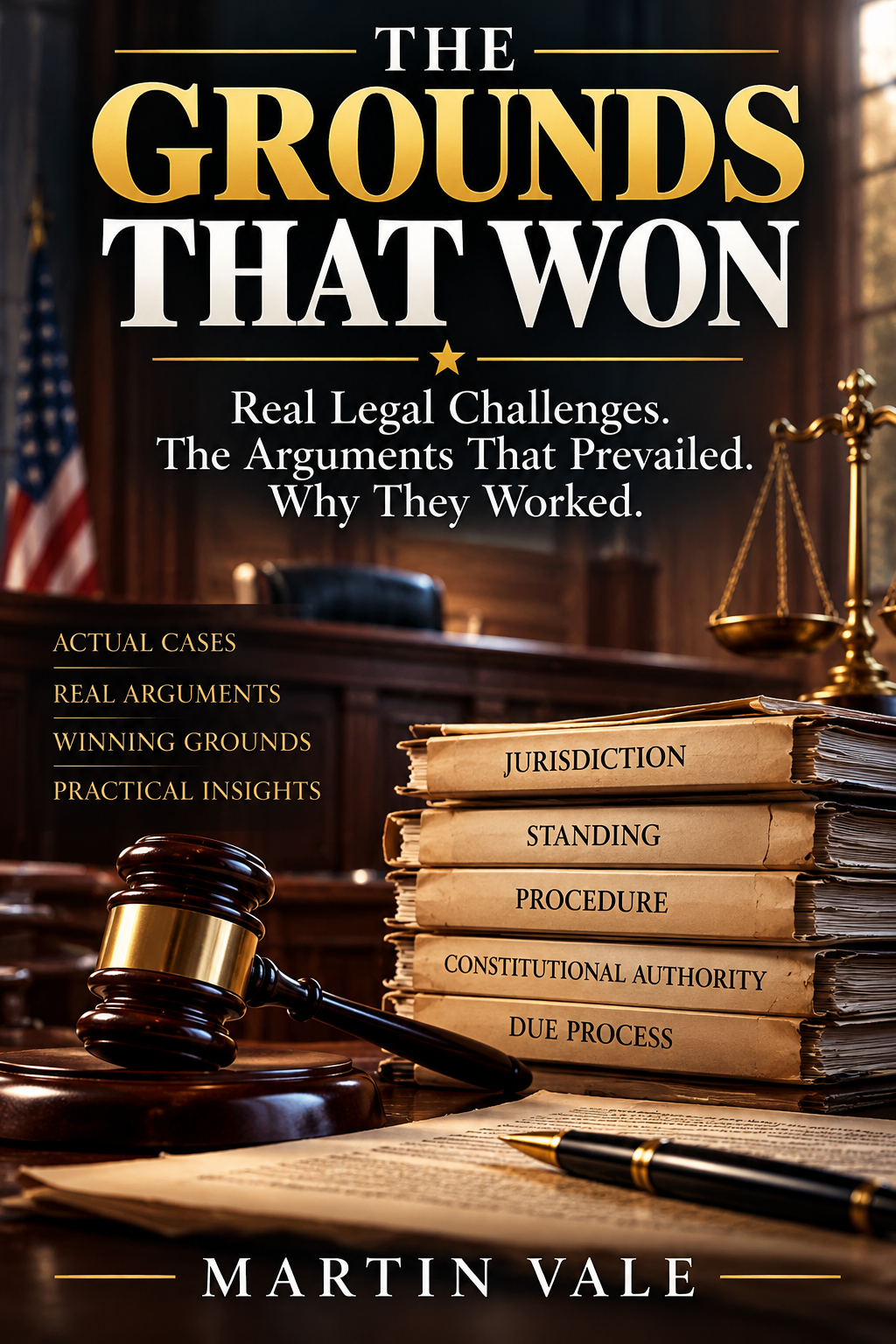
The Grounds That Won by Martin Vale — Real Legal Challenges, the Arguments That Prevailed, and Why They Worked

The Grounds That Won

Real Legal Challenges. The Arguments That Prevailed. Why They Worked.

Some arguments sound convincing. Others actually prevail in court.

What makes the difference?

In The Grounds That Won, Martin Vale investigates real legal challenges that succeeded, examining the arguments presented, the authorities relied upon, and the reasoning behind the decisions.

Rather than offering shortcuts or secret legal formulas, the volume asks a more revealing question:

What persuaded the court—and why?

Explore the difference between an appealing legal theory and an argument that survives judicial scrutiny.

Included with Mil.L. Enrollment
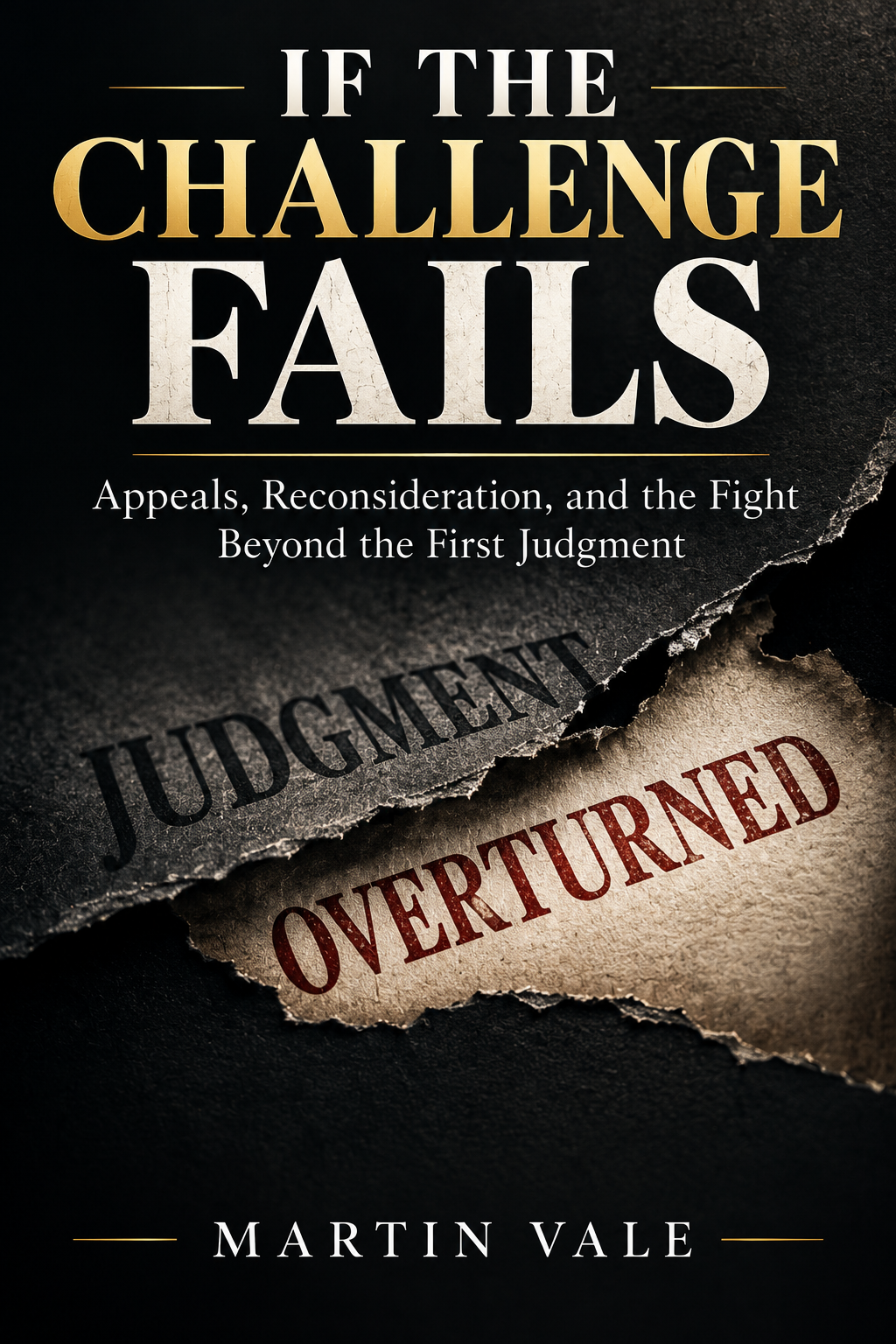
Second Companion Volume

If the Challenge Fails by Martin Vale — Appeals, Reconsideration, and the Fight Beyond the First Judgment

If the Challenge Fails

Appeals, Reconsideration, and the Fight Beyond the First Judgment

The judge has ruled. The judgment has been entered. The courtroom is empty.

Is the matter truly over?

If the Challenge Fails examines the legal landscape after an unfavorable decision: reconsideration, appeals, standards of review, procedural deadlines, and the principles that determine when a judgment may—or may not—be revisited.

Martin Vale explores why disagreement with a ruling is not necessarily a legal basis for overturning it, and why the opportunity to challenge a decision depends on more than a party’s conviction that the court was wrong.

Because the first judgment may settle the dispute—or open an entirely different set of questions.

Included with Mil.L. Enrollment

Two companion volumes. Two sides of the courtroom question.

What makes a challenge succeed?

And what happens when it doesn’t?

A Different Kind of Legal Education

Mil.L. isn’t law school, bar preparation, professional certification, or legal advice.

It’s a guided investigation of ideas most people encounter their entire lives without ever having the opportunity to examine closely:

Rights. Property. Consent. Jurisdiction. Citizenship. Sovereignty. Authority.

You don’t need to arrive with a particular worldview or conclusion.

You need curiosity—and a willingness to follow the sources.

Begin With the Question.

Follow the sources.

Examine the instruments.

See where the record leads.

Mil.L. is completely self-paced. There are no scheduled classes and no need to keep pace with anyone else. Work through the material on your schedule and return to it whenever you need to.

Your Enrollment Includes

Mil.L. — Mastery in the Instruments of Law and Liberty

Complete access to all eleven modules, primary-source exercises, discovery activities, and review quizzes.

The Grounds That Won

Real Legal Challenges. The Arguments That Prevailed. Why They Worked.

Companion Volume · Included

If the Challenge Fails

Appeals, Reconsideration, and the Fight Beyond the First Judgment

Companion Volume · Included

REGISTER NOW

$119 · One-Time Enrollment

11 Modules · 2 Companion Volumes · One Enrollment

Mil.L. — Mastery in the Instruments of Law and Liberty is an independent educational course offered for personal learning and historical inquiry. It is not an accredited academic program, professional certification, occupational credential, legal qualification, or source of legal advice.